
Drainage problems may start subtly, but they rarely stay that way. In South Florida’s subtropical climate, where downpours can occur daily in the summer, landscapes need to handle high volumes of water quickly and efficiently. If your property struggles to manage runoff, standing water, or soggy soil, it could be time to reassess your drainage system.
For HOAs, commercial sites, and residential properties alike, drainage issues can lead to plant stress, structural damage, and even safety hazards. The sooner you recognize the signs, the easier it is to correct the problem before it becomes costly or irreversible.
Pooled Water After Rainstorms
One of the most obvious signs your drainage system is underperforming is water that lingers in certain areas after it rains. While temporary puddles are normal during heavy storms, water that remains for hours—or worse, days—is a clear indicator of poor soil absorption or inadequate grading.
These soggy zones often develop in low-lying parts of your yard, around foundation plantings, or near patios and driveways. If you consistently notice water pooling in the same areas, it’s time to explore solutions such as regrading, installing a French drain, or adding dry wells to improve runoff flow.
Mushy Soil and Failing Plants
Plants need water to thrive, but too much moisture can suffocate roots and lead to fungal infections. If your grass feels soft and sponge-like underfoot or your planting beds remain wet long after irrigation or rainfall, the excess moisture could be stunting plant health.
Tell-tale signs include yellowing leaves, slow growth, wilting despite wet soil, or an uptick in root rot and mildew. In many cases, these symptoms are not due to poor plant selection or maintenance, but rather the soil’s inability to drain properly. Correcting this with a customized drainage plan can restore plant vitality and reduce replacement costs over time.
Water Stains or Erosion Around Hardscapes
Drainage issues can also affect your hardscape features. Staining along the edges of walkways, driveways, or retaining walls often points to water that isn’t draining as it should. Over time, repeated exposure to pooling water can lead to discoloration, mildew buildup, and slippery surfaces.
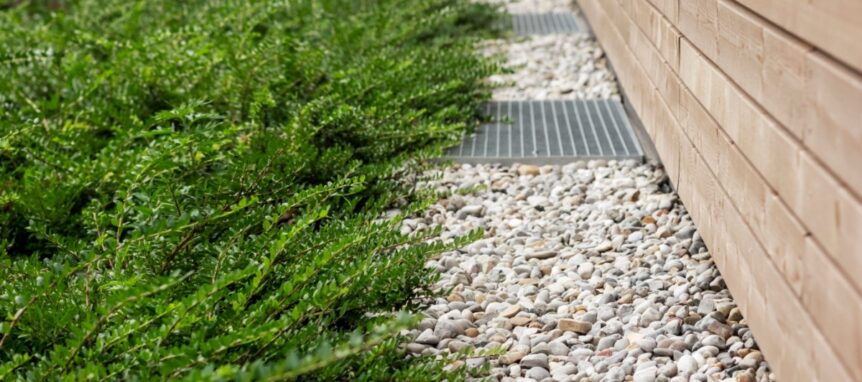
Erosion is another key indicator. If you notice soil washing away from flower beds, exposed roots, or undermined pavers, water is flowing too quickly or unpredictably across your landscape. Installing swales, river rock beds, or redirecting runoff with piping can slow and guide water where it belongs.
Insect and Pest Activity in Damp Areas
Standing water isn’t just a sign of poor drainage—it’s also an open invitation to unwanted pests. Mosquitoes, ants, and even rodents are drawn to damp environments where they can breed, nest, or burrow.
In HOA communities and multi-family developments, pest problems in shared outdoor spaces can quickly affect multiple homes. If you’re noticing spikes in mosquito activity or pest nests near waterlogged soil, it’s time to address the underlying drainage issue. Eliminating excess moisture is one of the most effective ways to discourage infestations without relying heavily on chemicals.
Downspout or Gutter Overflow
Sometimes, the issue isn’t with the ground—but with how water is directed to it. Improperly placed downspouts, clogged gutters, or broken extensions can cause concentrated water flow to erode the soil or flood nearby beds.
If you see water pouring directly off roofs or pooling near your foundation after a storm, check that your gutter system is functioning properly. You may need to extend your downspouts further away from the structure or integrate them with underground drainage systems to manage runoff more effectively.
A Smell That Signals Trouble
Lingering dampness can lead to more than visible damage, it can produce unpleasant odors. Soil that remains saturated often develops a musty, sour smell, especially in shaded areas where sunlight can’t evaporate excess water. If your landscape has begun to smell stale or swampy, there may be hidden drainage problems below the surface.
Left unaddressed, this can lead to mold growth, structural damage, and even health issues for residents or guests. A comprehensive drainage assessment can help identify the source and propose solutions that restore both freshness and function.
Improve Drainage Before the Damage Builds
At Legacy Services, we understand the unique drainage challenges of South Florida’s climate and soil conditions. Our experienced team designs and installs drainage solutions that protect your landscape, preserve your hardscapes, and support long-term plant health.
Whether you’re dealing with minor pooling or persistent flooding, we can help you identify the cause and implement the right fix—before the next storm makes the problem worse.
To schedule a professional drainage assessment, contact us today.